
Why Your Knee Pain May Not Feel Like a Problem Located Only in the Knee
- Pain Management
Paul Petersen
- 0
- 7 minutes read
Vital Takeaways for Knee Health
- Knee pain is frequently a symptom rather than the root cause, often stemming from imbalances in the hips, ankles, or feet.
- The body operates as a connected kinetic chain, meaning tension in one area can transfer stress directly to the knee joint.
- Professional assessment is essential to determine whether your discomfort requires rest, specific exercises, or manual therapy.
- Regular care, including a structured knee pain massage, can improve tissue health and relieve unnecessary strain on the joint.
Understanding the True Source of Your Discomfort
When you feel a sharp twinge or a dull ache in your knee, your immediate reaction is to focus entirely on that specific spot. It seems logical. If the pain is in the knee, surely the problem resides within the joint itself. However, the human body rarely functions in isolation. Often, the knee acts as a mediator, absorbing the stress generated by other parts of the body. If your hips are tight or your ankles are restricted, your knees are forced to compensate, often bearing the brunt of poor mechanics during everyday movement.
Recognising this connection is the first step toward effective relief. Rather than viewing your knee as a broken part, it is more helpful to see it as a victim of circumstances elsewhere in your kinetic chain. By broadening your focus, you can address the root cause of the irritation rather than simply masking the symptoms.
Why Does My Knee Hurt If The Problem Isn’t There?
To understand referred pain, imagine the body as a series of connected levers and pulleys. If the ankle does not flex correctly when you walk, the knee must rotate or shift to accommodate that restriction. Over thousands of steps, this micro-compensation creates repetitive stress. Eventually, the tissues around the knee become inflamed or fatigued, sending pain signals to your brain.
This phenomenon is common in both athletes and office workers. A runner with weak glutes may find that their knee collapses inward during their stride, leading to discomfort. Similarly, someone who spends long hours seated might experience tightness in the hamstrings and quads, which pulls on the patella. When you treat the symptom without correcting the underlying biomechanical issue, the discomfort inevitably returns. Addressing the surrounding muscle groups is essential to offload the pressure on the knee joint.
How Do My Hips and Ankles Influence My Knee Health?
The stability of your knee is heavily dependent on the joints immediately above and below it. Your hips provide the foundation for your posture, while your ankles dictate how your body interacts with the ground. If either of these foundations is compromised, the knee suffers.
| Factor | Description | Effect on Knee |
|---|---|---|
| Restricted Ankle Mobility | Inability to dorsiflex fully | Forces the foot to roll inward, causing the knee to twist painfully. |
| Weak Hip Abductors | Lack of stability in the pelvis | Causes the knee to track incorrectly and collapse during movement. |
| Tight Quads/Hamstrings | Muscle over-shortening | Creates constant, low-level compression on the patella. |
By identifying these weaknesses, you can restore balance to your body’s movement patterns, ensuring that the knee is only doing the work it was designed to handle.
How Can a Knee Pain Massage Offer Relief?
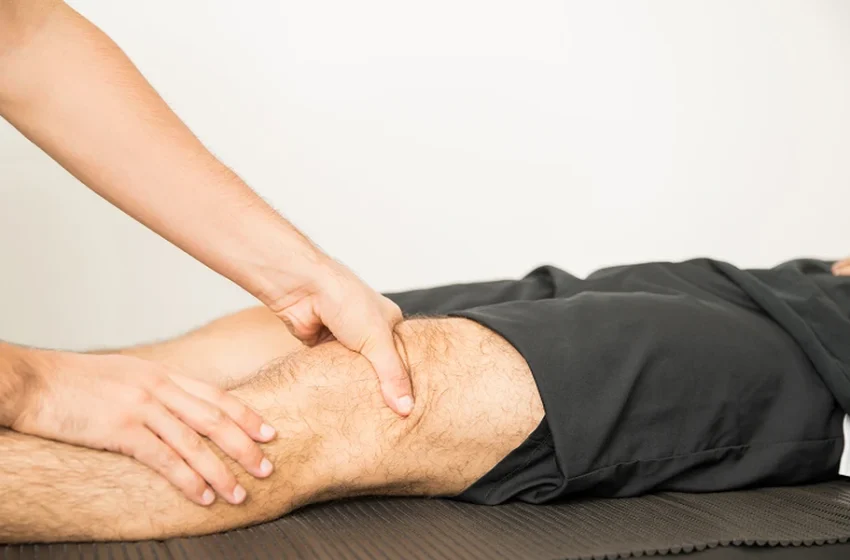
Manual therapy offers a distinct advantage when dealing with stubborn discomfort. A skilled therapist does not simply rub the painful area; they evaluate the muscles feeding into the knee. A targeted knee pain massage works by releasing the adhesions and tension stored in the quadriceps, hamstrings, and calves.
When these large muscle groups are tight, they lose their elasticity, acting like thick rubber bands pulling constantly on the knee. Massage helps to improve blood flow, which is vital for the health of the joint tissues and the surrounding fascia. By increasing flexibility and reducing muscular guarding, a professional session can create the necessary space for the knee to function without constant irritation. It is a proactive approach that supports the body’s natural capacity to heal and move efficiently.
Is Knee Sports Massage Suitable For My Condition?
Many people wonder if they are ready for hands-on therapy, especially when they are already experiencing discomfort. The reality is that assessment is everything. A tailored knee sports massage is not about forcing movement into a painful area; it is about calming down overactive tissues and supporting the muscles that stabilise the joint.
If you have experienced a sudden, severe injury involving significant swelling, instability, or an inability to put weight on your leg, a clinical assessment is your priority before seeking massage. However, for those dealing with nagging aches, repetitive strain, or the lingering effects of past injuries, professional therapy can be highly beneficial. A qualified therapist will evaluate how you move, testing your strength and flexibility to create a plan that fits your specific needs. It is about working smarter, ensuring that your soft tissue support system is resilient enough to handle the demands of your daily activity.
Reclaiming Your Mobility and Comfort
Persistent discomfort in your knee is rarely just about the joint itself. By understanding the biomechanical relationships between your hips, ankles, and knees, you move closer to a lasting solution. Relying on professional guidance ensures that you address the underlying tension rather than merely chasing the symptoms.
Reach out to us at The Sports Massage Clinic to book an assessment. Our specialists are ready to help you identify the source of your discomfort and create a personalised plan to get you moving with confidence again.
